Happy New Year #2012  

Posted by Naomi Litvin

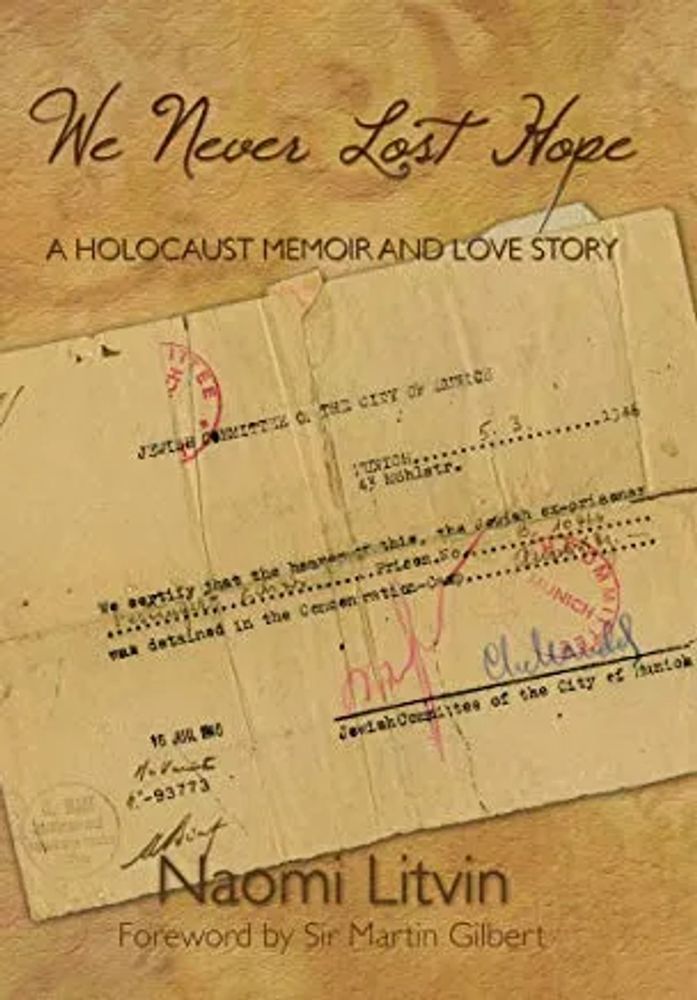
As each year draws to a close we see on television the names and faces of all the famous people that have left this world. This year that list includes my mother. She will live forever inside of me, as long as I live, and in the pages of the book that we worked on together.

And if I can make it through just one more day of this year, 2011, the most painful year of my life, then maybe I'll be able to say, as she said, that "We Never Lost Hope."


Rabbi Meir Kahane, 1st victim of al queda, on Jonathan Pollard  

Posted by Naomi Litvin

The Jonathan Pollard Case
 by Rabbi Meir Kahane
19 Adar 5747 - March 20, 1987 

The Jewish Press (N.Y.)
 

"As the storm over Jonathan Pollard swirls about nervous Israeli and American Jewish heads and both look warily over their shoulders, the Israelis watching for Weinbergers and the American Jews for less famous though far more numerous, hostile types, the time has come for normal Jews to spread a normal view of the affair."

what is the secret of occupy wall street?  

Posted by Naomi Litvin

What IS the secret of Occupy Wall Street? Looks like an early snowstorm on the East Coast may drive all their homeless mobs out here to California. After all, Oakland has given up and given in to them, overruling the no camping on city streets and parks. One teargas episode vs the Stink Mob and the City of Oakland has decided to just give in to these mobs. Their only apparent goal is to emulate Robin Hood: steal from the rich to give to the poor.

This is a very expensive and abusive collective temper tantrum! Normally snarled traffic in the San Francisco Bay Area is unbearable as it is! It is now taking over an hour to travel home nineteen miles from my job in Oakland home to my abode. All of this reminds me of the movie Soylent Green.

Please leave a comment! 
Tell me, what do you think is the secret of Occupy Wall Street?


thoughts on my book by David Shire: We Never Lost Hope: A Holocaust Memoir and Love Story  

Posted by Naomi Litvin in

This book is not the usual holocaust novel or memoir - and it's not even the usual love story;
but, rather, this book is a conversation, a dialogue - between the main characters: Edith, Mendi, Kurt, and Nate and some silent interviewer.

We are sitting-in, listening to these intimate conversations -  not able to actually participate - but we discover our characters as they really are - not necessarily a polished and edited performance - but something very honest and human.

The dialogues start before the war - the dreams and aspirations of that generation - but slowly the scenes change as the Nazis occupy Europe and the lives of the Jews change forever.

The changes are subtle at first - maybe a little relaxation of the religious dietary rules (Kashrut) - as the real need to eat and the widening food shortages - makes practical (and permissible) demands.
The whole transitory nature of life during these times - moving village or even, moving country was a necessary survival tactic - always looking for a better place to live.

Finally the family are transported to a concentration-extermination camp;
the atrocities; of these places can never be imagined - only fleeting glimpses in the dialogue allow us to begin to understand these horrors.
And the need to survive - by any means.

The war ends and Edith is liberated.
Despite all that she has experienced she makes the very conscious decision to get on with her life.
Munich, Paris, and ultimately to America

Despite the underlying sadness of the story, there are some relaxing moments;
on the Orient Express from Munich to Paris - Edith is up all night long kissing some soldier she met, while in the next compartment Mendi is sleeping away - real vignettes of very real people.

We live today, in a completely different world. I discovered these people through the grace of Social Media - so far removed from the Europe of 70 years ago. However, despite the fact that we do live in this newer world, I still feel very connected to these past times and to my Jewish people.
How much easier it is today, to find a lost relative through Twitter or Facebook.

I can imagine two parts of this story having direct interaction with my own past:-

Edith and Nate stop off in Scotland on their way to America. My Grandfather was very involved in the Glasgow Jewish community and, especially, involved himself with helping the refugees escaping Nazi Europe, maybe he went to the airport to meet them, to invite them home for a meal?

My father grew up in London, but during the "blitzes" of the City, my paternal Grandfather decided to evacuate my Grandmother and the two children to Sydney, Australia. Maybe, at some time, my father went to visit the rabbit farm and buy some wool.

But we'll never know.

David Shire 
Israel
follow David on twitter


,

holocaust remembrance is about hope  

Posted by Naomi Litvin

 Naomi wearing her Lone Tree Brewery shirt, gift from David Shire, of Israel

Thanks to everyone that has read my book and kindle.
This book keeps my parents' memory alive.
We Never Lost Hope reminds us that holocaust remembrance 
is about hope.
____________________________________________________________________________________________
 
 The Trailer by Naomi Litvin

words, music, words  

Posted by Naomi Litvin


Sometimes words replace music 
and sometimes music replaces words.